

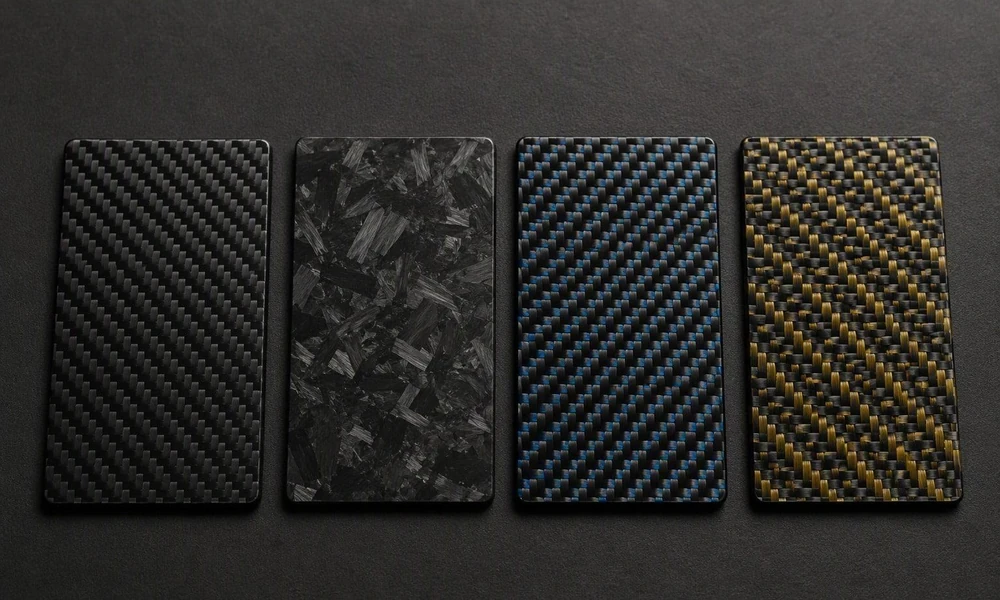
The same carbon part reads completely differently on different paint.
Carbon fiber is black, and black goes with everything. That is the lazy advice, and it is wrong often enough to matter. A carbon hood on a black car is a whisper. The same hood on a white car is a shout. Neither is wrong, but they are different decisions with different rules, and the builds that look intentional are the ones where someone made the decision on purpose.
On Black Cars: Texture Is the Whole Game
Carbon on black paint disappears at a distance and rewards a closer look. Since there is no color contrast, the entire effect comes from texture and finish contrast: gloss carbon against matte black paint, matte carbon against gloss black, or the marble chaos of forged carbon against either. This is the stealth build, and its failure mode is invisibility. If the finish matches the paint too closely, the parts simply vanish. Change the finish, not the color, and the texture does the talking.
On White and Silver: Maximum Contrast, Motorsport Rules
White and silver cars give carbon its full voice. The contrast is total, the weave reads from across the parking lot, and the look carries genuine motorsport lineage. Touring cars and GT racers have run black aero on light bodies for decades because raw carbon saves paint weight. The trap here is overdoing it: on a high-contrast car, every carbon piece is a bold graphic element, and five bold graphics is a livery, not a build. Pick two or three major pieces and let them breathe.
On Bright Colors: When Black Clashes
Red, blue, yellow, green. Saturated paint is where black carbon gets complicated. Against a bright color, large black panels can read as a patch, especially if the shapes are unrelated to the car’s lines. Three fixes work. First, keep carbon to the low and rear zones, splitters, diffusers, spoilers, where black reads as shadow rather than contrast. Second, use hybrid weaves that echo the paint: gold aramid against yellow or red is a deliberate conversation, not an accident. Third, paint the part. Body-colored carbon mirror caps and spoiler blades keep the weight savings invisible. The carbon fiber color guide covers how each of these routes is actually produced.
Do Not Forget the Wheels
The paint is not the only color on the car. Wheels and brake calipers are the second and third color voices, and carbon parts have to harmonize with all three. Black wheels plus carbon aero on any paint color creates a heavy, grounded look that suits aggressive builds. Silver or machined wheels with carbon reads more OEM and technical. A bright caliper peeking through spokes can echo a tinted resin accent beautifully, or fight it. Stand back and count the colors on the car. More than four, including the carbon, is usually one too many.
The One-Finish Rule
Whatever the paint color, the fastest way to make carbon look accidental is mixing finishes carelessly. A gloss hood beside a matte spoiler beside a satin roof reads as three unrelated purchases. Pick one finish family for the whole car, all gloss, all matte, or all satin, and break it only with intent, like a matte hood on a gloss car as a single statement. Consistency reads as design. Variety reads as shopping.
The Viewing-Distance Trick
Here is a simple test professionals use. Walk twenty paces from the car and look back. At that distance, color contrast is all that survives. If the carbon pieces still make visual sense, if they follow the car’s lines and balance each other, the build works. Then walk up close, where weave quality and finish depth take over. A build that works at both distances is finished. One that only works up close is a parts collection.
If you are genuinely torn between two directions, ask the seller for photos of the same part on your car’s color. Good suppliers have customer galleries for exactly this reason. An hour of looking at real combinations beats a week of imagining them.
When to Break Every Rule
Track cars get a pass on all of this, because function is the aesthetic. A white track car with a raw carbon hood, trunk, and wing is not making a style statement; it is wearing its priorities. If the parts are on the car because they work, the look takes care of itself. It is the street builds, where every choice is optional, that earn or lose coherence one decision at a time.
Carbon goes with everything the way a black suit goes with everything: technically true, practically meaningless. Fit it to the paint, the finish, and the purpose, and it will look like it was always supposed to be there. Do that, and strangers will assume the car came from the factory this way, which is the highest compliment a build can earn.
