

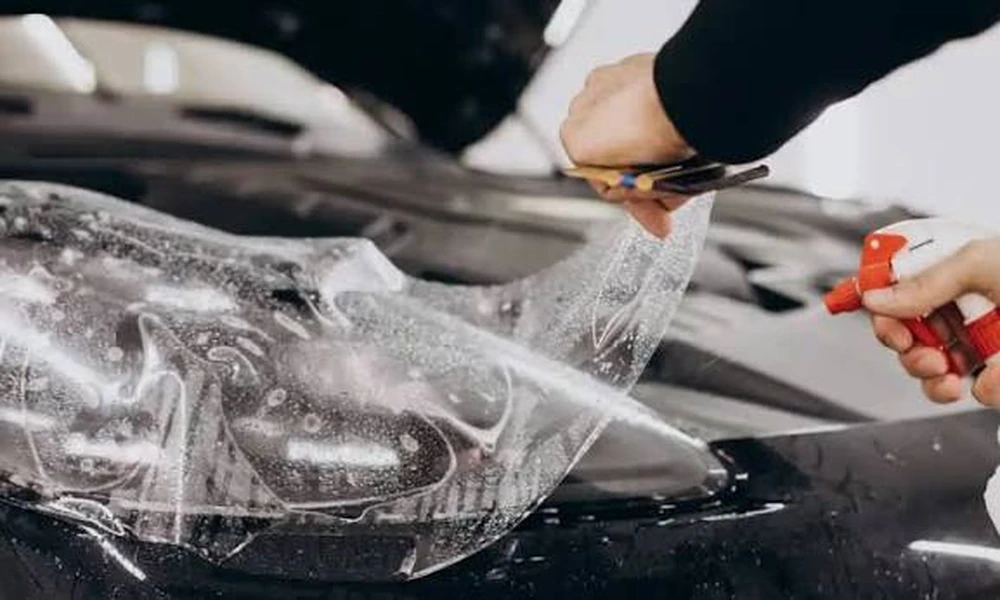
Paint protection film has evolved from a specialist automotive product into a mainstream option for drivers who want to preserve factory paint, reduce visible wear, and maintain a cleaner finish over time. As demand has expanded, so has the number of companies producing polyurethane films for installers, distributors, detailing businesses, and private-label brands.
China has become an important manufacturing base for this market. Buyers can now find factories producing everything from standard transparent protection films to matte, satin, colored, hydrophobic, and self-healing varieties. Yet a large supplier base also makes selection more complicated. Comparing manufacturers effectively requires more than checking film thickness or choosing the lowest quotation.
The strongest suppliers distinguish themselves through material consistency, manufacturing control, adhesive performance, testing standards, technical support, and their ability to maintain quality across repeated production runs.
Film Construction Matters More Than a Specification Sheet
PPF is a multilayer product, and its performance depends on how well those layers work together. A typical film includes a protective topcoat, a thermoplastic polyurethane layer, an adhesive system, and a release liner. Weakness in any one component can affect the finished installation.
For example, a film may initially look exceptionally clear but develop discoloration after prolonged exposure to sunlight. Another may offer excellent gloss while having an adhesive that leaves marks during repositioning. Some films stretch easily during installation but become unstable around complex curves or panel edges.
For buyers comparing suppliers, this is why individual specifications should be viewed as part of a larger performance profile. Thickness, elongation, gloss, tensile strength, adhesive strength, UV resistance, and surface properties need to work together rather than simply producing impressive figures on a technical sheet.
A reliable manufacturer should also be able to explain how those properties are achieved and controlled during production.
TPU Quality Has a Major Influence on Performance
Thermoplastic polyurethane is the core material responsible for much of a PPF product’s flexibility, toughness, and resistance to impacts. The quality and formulation of the TPU therefore deserve careful attention.
Automotive film must stretch around mirrors, bumpers, body contours, and other complicated surfaces without becoming permanently distorted. At the same time, it needs enough structural stability to remain secure once installation is complete.
Quality TPU can also help the film withstand environmental stresses such as road debris, temperature changes, washing chemicals, rain, and prolonged sunlight.
When evaluating manufacturers, buyers should consider whether the supplier maintains consistent raw-material sourcing. Two rolls carrying the same product code should behave similarly during installation. Large variations between batches can create problems for installers and eventually damage the reputation of the distributor or brand selling the film.
Consistency is often more valuable than exceptional performance from a single sample.
Topcoat Technology Affects Everyday Appearance
The surface coating receives much of the daily abuse once PPF is installed. Dirt, water, insects, bird residue, washing chemicals, sunlight, and minor abrasions all interact with this outer layer.
Modern films frequently incorporate self-healing properties that allow fine surface marks to become less visible when exposed to heat. Some also use hydrophobic coatings designed to reduce water adhesion and make routine cleaning easier.
A capable supplier should be able to demonstrate how its topcoat performs after repeated exposure rather than only when the film is new.
Long-term clarity is particularly important for transparent PPF because the product is intended to protect paint without significantly changing its appearance. Haziness, uneven gloss, premature staining, or surface degradation can quickly undermine that purpose.
For matte and satin films, surface consistency becomes equally important. An uneven texture may be much more noticeable across large body panels than it appears on a small test sample.
Adhesive Performance Can Determine Installation Quality
Adhesive technology is sometimes overlooked during supplier comparisons, yet it has a direct influence on both installation and long-term appearance.
Installers need enough initial tack to position the film securely, but they also need some flexibility while aligning patterns and removing trapped solution. Excessively aggressive adhesive can make repositioning difficult, while insufficient adhesion may contribute to lifting along edges or challenging curves.
The adhesive should also remain visually transparent underneath the film. Distortion, glue lines, silvering, or inconsistent bonding can become noticeable under strong lighting, particularly on dark-colored vehicles.
Testing sample material on real body panels is therefore more informative than relying entirely on laboratory figures. Installers can evaluate slide characteristics, tack, stretch behavior, squeegee response, edge adhesion, and clarity under conditions that closely resemble everyday work.
Feedback from experienced installers can reveal quality differences that may not appear in a standard product comparison.
Manufacturing Consistency Separates Serious Suppliers
One excellent roll does not necessarily indicate a dependable manufacturing operation. Commercial buyers usually require repeatable performance across dozens, hundreds, or thousands of rolls.
This makes production control an essential part of supplier evaluation.
Manufacturers should have systems for checking coating uniformity, thickness tolerance, surface defects, adhesive consistency, contamination, optical clarity, and finished roll condition. Buyers placing larger orders may also want to understand how batches are tracked and how production problems are documented.
Reliable packaging matters as well. Film can be damaged by poor winding, crushed cores, contamination, excessive heat, or inadequate protection during transportation.
For distributors operating internationally, manufacturing discipline reduces the likelihood of receiving inconsistent stock after building customer expectations around an earlier batch.
Product Range Should Match the Intended Market
The ideal supplier is not necessarily the company with the largest catalog. What matters is whether its product range matches the needs of the target customers.
A distributor serving professional detailing shops may prioritize premium transparent films with predictable installation characteristics. Another buyer may want matte finishes, colored PPF, textured films, or private-label products for a broader retail audience.
Some markets place particular emphasis on high gloss and hydrophobic performance, while others may prioritize durability, competitive pricing, or easier installation.
Buyers should therefore establish their required product position before comparing factories. A manufacturer designed around high-volume economical films may not be the right partner for a premium detailing brand, even if its pricing initially appears attractive.
The reverse is also true. A sophisticated premium film may provide little commercial advantage in a market where customers primarily make decisions based on installation price.
Samples Should Be Tested Before Large Orders
Product samples provide one of the most practical ways to narrow a supplier shortlist.
Testing should involve more than examining a small piece of film on a flat painted panel. Ideally, sample rolls should be used during actual installations involving curves, recessed areas, edges, and different paint colors.
Installers can then observe how the material stretches, how quickly it recovers, whether the adhesive becomes visible, and how easily the film can be repositioned.
The installed film should also be observed over time. Immediate appearance reveals only part of the story. Exposure to sunlight, washing, heat, moisture, and normal driving conditions can highlight differences that were not obvious during installation.
Structured testing makes purchasing decisions less dependent on marketing descriptions and more dependent on practical evidence.
Choosing a Manufacturing Partner for Long-Term Supply
Price will always influence sourcing decisions, but film quality should be considered alongside communication, production stability, documentation, lead times, customization options, packaging, and after-sales technical support. Buyers researching PPF manufacturers in china may encounter companies such as ClearPro while comparing manufacturing capabilities, available film constructions, and supply arrangements.
The most suitable manufacturer is ultimately the one capable of delivering predictable material that performs consistently in the hands of professional installers. A slightly lower unit price offers limited value if batches vary, installation becomes difficult, or warranty complaints increase.
Selecting a PPF supplier is therefore best treated as a quality-management decision rather than a simple purchasing exercise. Careful sampling, technical evaluation, installer feedback, and attention to manufacturing consistency can help buyers identify films that perform reliably long after the initial order has been delivered.
